Pedestrian Injury Attorneys in Fairfax, VA Protecting The Rights Of Individuals Hit By Vehicles
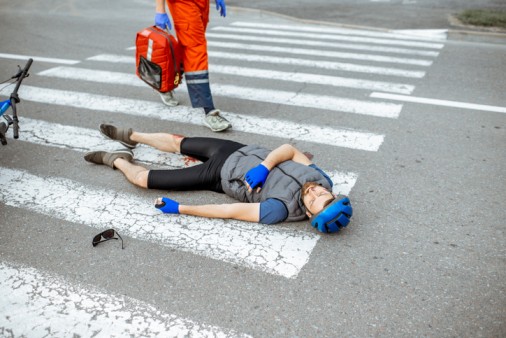
In a split second, a driver’s lapse in judgment can catastrophically alter the life of any pedestrian involved in a collision.
A missed crosswalk, hurried turn, glance at a phone, or failure to check before backing out may put thousands of pounds of moving vehicle against a person with nothing to absorb the impact.
The questions that follow can be equally difficult. The driver may insist the pedestrian appeared suddenly. An insurer may question where the person crossed, whether they had the right-of-way, or whether they were paying attention.
Meanwhile, the injured person may be unconscious, in the hospital undergoing treatment, or simply unable to remember every second of that fateful moment.
MacDowell Law Group, PC represents pedestrians and families facing these situations in Fairfax and throughout Northern Virginia.
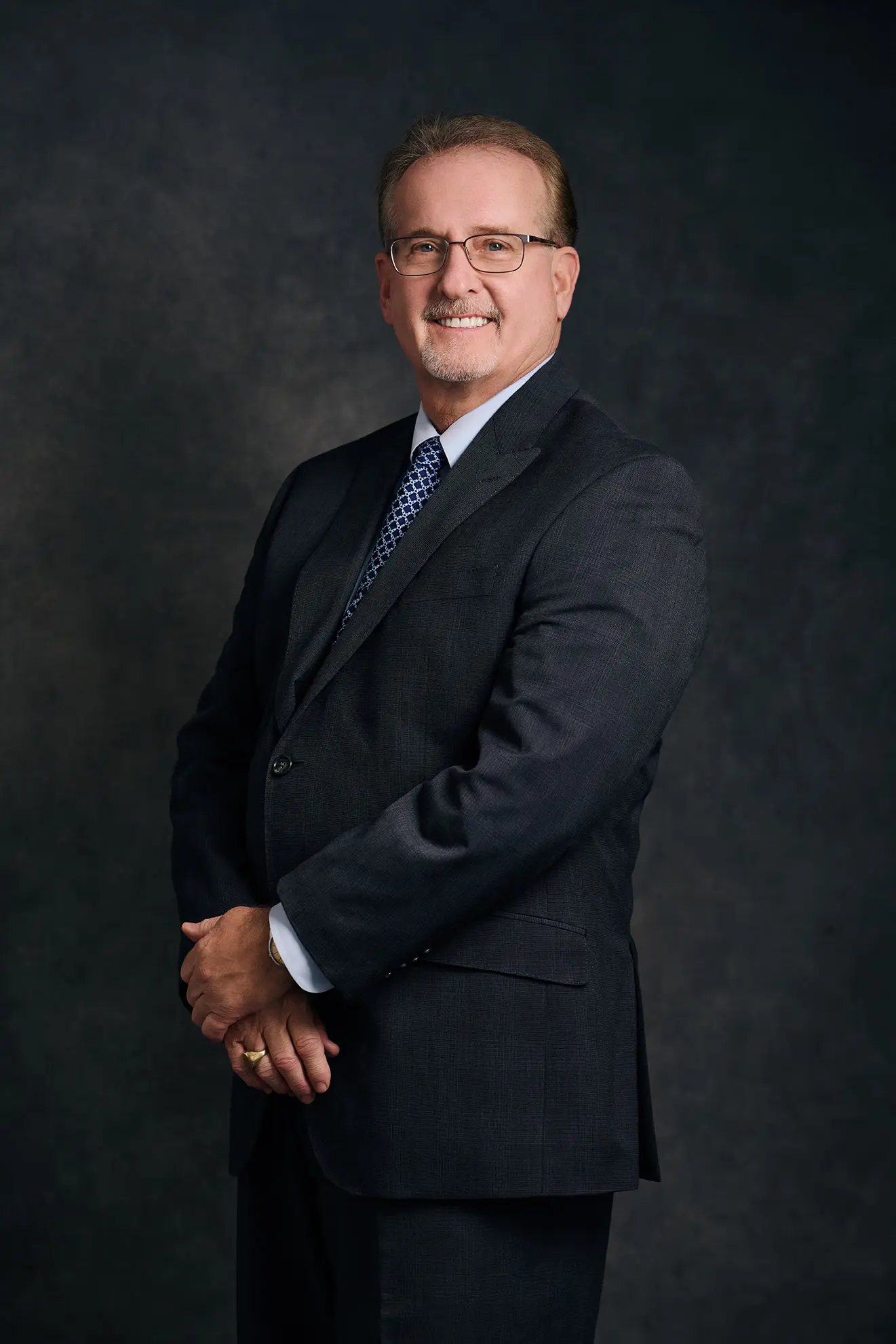
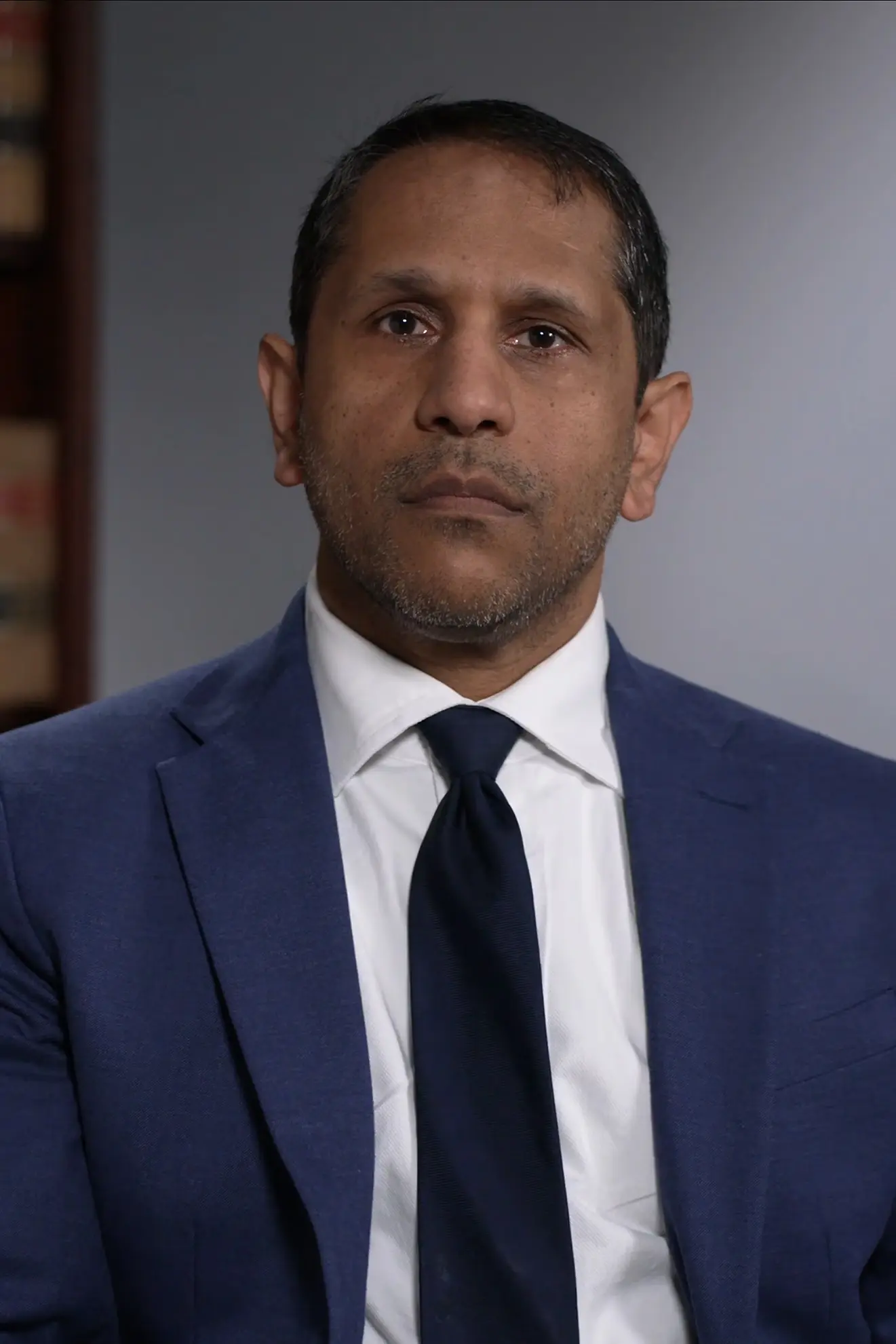
Attorneys Richard F. MacDowell Jr. and Bhavik D. Patel examine the physical evidence, traffic rules, witness accounts, available video, medical consequences, and competing versions of events to determine what actually happened. Unfortunately, these collisions are not uncommon.
Behind those numbers are people who were walking to work, crossing a street, leaving a store, exercising, or simply getting from one place to another when a vehicle entered their path.
A $350,000 Result in a Pedestrian/Bicycle Accident Case
The amount recovered in one case cannot predict what another injured pedestrian may receive. The outcome depends on the particular injuries, evidence of responsibility, insurance coverage, medical needs, employment consequences, and other damages involved.
Past results do not guarantee a similar outcome in another case.
Where Walking and Heavy Traffic Intersect in Fairfax County
Fairfax was not designed around one type of transportation. Pedestrians share space with interstate commuters, local traffic, buses, delivery vehicles, cyclists, commercial centers, residential neighborhoods, schools, and Metro-connected development.
That combination creates very different pedestrian environments within the same county.
Someone walking across parking lots and sidewalks alongside shops and restaurants in Fairfax City may encounter cars turning through intersections or entering parking lots.
The Mosaic District combines substantial foot traffic with vehicles moving through streets, garages, and commercial entrances. Tysons presents another mix of wide roads, major intersections, dense development, and drivers focused on navigating heavy traffic.
Pedestrians are always walking and crossing major travel arteries in Northern Virginia, including Route 50, Route 29, Route 123, Fairfax Boulevard, Chain Bridge Road, Gallows Road, Arlington Boulevard, Braddock Road, and Fairfax County Parkway.
A pedestrian collision on one of these corridors cannot be evaluated simply by noting that a vehicle struck someone.
The investigation may need to consider the number of lanes, traffic signal sequence, turning movements, lighting, sight distance, nearby businesses, parking entrances, pedestrian controls, and where each person was positioned before impact.
When the Driver Says the Pedestrian “Came Out of Nowhere”
Few statements illustrate the dispute in a pedestrian case better than a driver saying, “I never saw them.”
That statement raises several questions rather than answering them.
Where was the driver looking? Was the vehicle turning? How long had the pedestrian been visible? Was another vehicle stopped for the pedestrian?
Were headlights illuminating the crossing area? Was the driver traveling too quickly to respond to something that should reasonably have been anticipated?
Insurance carriers may also focus on the pedestrian’s actions.
They may contend that the person crossed outside a marked crosswalk, entered the road unexpectedly, looked at a phone, disregarded a pedestrian signal, wore dark clothing, or failed to watch approaching traffic.
In Virginia, those allegations matter because contributory negligence can bar an otherwise valid recovery.
Claims of Contributory Negligence must be supported by the facts.
The absence of painted crosswalk lines, for example, does not automatically establish that someone crossed illegally or negligently.
Virginia law recognizes pedestrian rights at certain intersections without marked crosswalks. A driver turning through an intersection also has obligations toward pedestrians crossing the roadway the driver is entering.
Our Fairfax pedestrian accident attorneys examine the actual location and evidence rather than allowing an insurer’s characterization of the pedestrian’s behavior to become the accepted version of events.
Who Had the Right-of-Way?
Right-of-way questions after a Fairfax pedestrian crash can turn on details that are easy to overlook.
Virginia law requires drivers to stop for pedestrians in several situations, including clearly marked crosswalks and certain intersection crossings. Drivers turning into a roadway must also account for pedestrians crossing that roadway.
A vehicle leaving a driveway, alley, building, or private road presents another common scenario. Drivers generally must stop before entering a public highway or sidewalk and yield to pedestrians approaching on the sidewalk.
Pedestrians have legal responsibilities, too. Virginia regulates where pedestrians should cross and when they may travel along roadways.
The presence or absence of a crosswalk therefore does not settle every claim. Neither does the fact that a pedestrian was struck.
The important questions are more specific: Where was the pedestrian? What traffic controls applied? What was the driver doing?
What could each person see? Which direction were they moving? Did either have time to react? Was the Pedestrian helpless in the roadway when the vehicle approached?
Answering those questions can require far more than reading the police report.
Virginia’s Contributory Negligence Rule Raises the Stakes
Virginia’s contributory negligence doctrine can make a dispute over a few seconds of pedestrian movement enormously important.
If an injured pedestrian is found to have contributed to causing the collision, recovery may be barred. This differs from states that reduce compensation by a percentage of fault.
Consider a driver who turns right while watching traffic approaching from the left and strikes a pedestrian crossing from the driver’s right. The insurer may focus on whether the pedestrian looked toward the vehicle. The pedestrian’s claim may instead focus on whether the driver checked the crosswalk before moving.
Or a driver may claim a pedestrian entered the roadway suddenly, while a witness or surveillance recording shows that the person had already crossed several feet before the vehicle approached.
These are factual disputes, not conclusions.
For Richard F. MacDowell Jr., evaluating competing accounts of an incident is familiar territory. He began his legal career as an Assistant Commonwealth’s Attorney in Fairfax County and has spent more than four decades practicing law.
His courtroom background shapes how the firm approaches testimony, physical evidence, credibility, and disputed facts in personal injury litigation.
Mr. MacDowell graduated cum laude from Washington & Lee University and earned his Juris Doctor from American University’s Washington College of Law. Bhavik D. Patel, a graduate of the University of Virginia School of Law, adds his own litigation experience to the firm’s work on behalf of injured clients.
In a pedestrian case, that experience matters most when the issue is not simply what happened to the client, but whether the available evidence can establish how it happened.
A Pedestrian Does Not Have a Vehicle to Tell Their Side of the Story
After a two-car collision, investigators may have two damaged vehicles, electronic vehicle information, photographs from both drivers, and two people capable of describing the moments before impact.
A pedestrian may have none of those advantages.
Someone who suffers a traumatic brain injury may have no memory of the collision. A critically injured pedestrian may be transported from the scene before speaking with police. In a fatal crash, the driver’s account may initially be the only firsthand version available.
That makes independent evidence particularly valuable.
Depending on the circumstances, a Fairfax pedestrian accident attorney may look for:
Police crash reports.
Witness statements.
Surveillance recordings from a store, office, apartment, or residence.
Dashcam footage.
Available traffic-camera footage.
Photographs of the intersection or roadway.
Damage to the striking vehicle.
Debris and impact evidence.
Traffic and pedestrian signal information.
Roadway markings.
Lighting conditions.
Sight lines and obstructions.
Cell phone records when distraction is suspected.
Medical and emergency-response documentation.
An accident reconstruction professional may be useful in a serious disputed case to analyze vehicle speed, stopping distance, impact location, visibility, or the sequence leading to the collision.
Some evidence is temporary. A nearby business may overwrite surveillance footage. Vehicles are repaired. Road conditions change. Witnesses become harder to find.
The injured pedestrian may be unable to preserve any of it personally, which is one reason early investigation matters.
What to Do After Being Hit by a Vehicle
Many pedestrians cannot stand up after a collision, much less photograph an intersection and collect insurance information. Protecting a potential legal claim should never take priority over emergency medical care.
If your condition allows, however, there are practical steps that may help:
Call 911 or ask someone nearby to call. Police documentation and emergency medical assistance can both be important.
Get the driver’s information. If you cannot, ask a witness or responding officer whether they recorded it.
Identify witnesses. Someone waiting at an intersection, walking nearby, or traveling in another vehicle may have seen something you did not.
Photograph what will change. Traffic conditions, vehicle position, debris, lighting, and temporary obstructions may look different later.
Obtain appropriate medical care. Some injuries are not fully apparent at the scene.
Keep records of the consequences. Medical bills, missed work, transportation costs, and information about ongoing limitations may later help document damages.
Be cautious if the driver’s insurance carrier contacts you for a recorded statement. Questions about where you crossed, when you saw the vehicle, what you remember, and whether you were distracted can matter, especially under Virginia’s contributory negligence rule.
The Medical Consequences of Being Physically Struck
Pedestrian injuries frequently involve more than one part of the body because the person can experience two separate impacts: first with the vehicle and then with the roadway, windshield, hood, or another object.
The financial impact doesn’t stop with an ambulance or emergency room bill.
A pedestrian with multiple fractures may need surgery followed by months of physical therapy. A brain injury may affect concentration, memory, personality, or the ability to return to the same work. Someone with a spinal injury may require continuing treatment, assistance at home, or changes to everyday routines.
For that reason, evaluating a serious pedestrian injury before the medical outlook is reasonably clear can produce an incomplete picture of the losses.
What Happens When the Driver Leaves?
A pedestrian who watches the vehicle disappear after being struck faces a very different problem: before pursuing the driver, someone must first identify them.
Hit-and-run investigations may rely on fragments of information. A witness remembers part of a license plate. A nearby doorbell camera captures a vehicle leaving the area. Pieces left at the scene help identify a make or model. A business camera shows the vehicle moments before impact.
Police investigation may ultimately locate the driver, but identification is not the only issue.
Applicable uninsured motorist coverage may become important in some hit-and-run cases. Available options depend on the circumstances and the insurance policies involved.
Our attorneys examine both tracks when appropriate: evidence that may identify the responsible driver and insurance that may provide a potential source of recovery even when the driver cannot be located.
A Driver May Not Be the Only Responsible Party
Some pedestrian cases begin with an individual motorist and end there. Others do not.
A delivery driver, contractor, salesperson, or other employee may be performing work duties when a collision occurs. A commercial vehicle may involve an employer or business with separate insurance coverage. Multiple vehicles may contribute to the sequence that ultimately strikes a pedestrian.
The facts determine whether another person or business may bear responsibility.
This can become especially important after a catastrophic injury. Severe medical needs and long-term loss of earning capacity may substantially exceed the coverage available under a single driver’s policy.
Our attorneys examine who was involved, why the vehicle was being operated, who owned it, and what insurance may apply rather than assuming the driver’s individual policy is the only relevant source.
Why the Insurance Company’s Early Questions Matter
The pedestrian may still be recovering when an insurance adjuster begins investigating fault.
An adjuster may ask for a recorded statement about where the person crossed, whether they saw the vehicle, what signal was showing, whether they were using a phone, or what they remember immediately before impact.
The insurer may also request medical authorizations or information about previous injuries. Later disputes can concern whether all treatment resulted from the collision, whether a prior condition contributed to current symptoms, or whether future care is necessary.
An early settlement offer creates another decision.
A payment may seem substantial when someone is missing work and bills are accumulating. But a settlement generally ends the claim.
If surgery becomes necessary later or an injury prevents a return to the same occupation, there may be no opportunity to reopen the case for additional compensation.
MacDowell Law Group evaluates the medical evidence, liability issues, insurance coverage, and longer-term consequences before advising a client about a proposed resolution.
Putting a Dollar Value on Losses That Extend Beyond Medical Bills
A pedestrian collision can change the way someone earns a living, cares for family members, moves through the community, and handles ordinary daily activities.
A Virginia personal injury claim may seek compensation for losses such as:
Past and future medical expenses.
Lost wages.
Reduced future earning capacity.
Rehabilitation.
Pain and suffering.
Permanent impairment.
Scarring and disfigurement.
Other damages recoverable under Virginia law.
The significance of each category depends on the individual.
For someone whose job requires standing, walking, lifting, or driving, a serious leg or pelvic injury can directly affect earning capacity. For another person, a brain injury may create cognitive limitations that make returning to highly technical or demanding work difficult.
The objective is not to attach a generic number to an injury. It is to document what the collision has changed and what those changes may cost over time.
When a Pedestrian Collision Is Fatal
Virginia’s 138 pedestrian deaths in 2025 represented a 9.5 percent increase from the year before, even though the overall number of pedestrian crashes decreased.
For families, a fatal pedestrian collision creates legal questions at a time when the focus is understandably on grief and immediate responsibilities.
Virginia wrongful death law allows qualifying family members to pursue certain losses when another party’s negligence causes a death. Depending on the circumstances, recoverable damages may address sorrow and mental anguish, lost companionship and guidance, lost income and services, qualifying medical expenses related to the final injury, and reasonable funeral expenses.
The underlying collision must still be investigated.
In fact, preserving independent evidence can become even more important when the pedestrian cannot provide an account of what happened. Witnesses, cameras, roadway evidence, vehicle damage, and reconstruction may be needed to test the driver’s version of events.
What Working With MacDowell Law Group Looks Like After a Pedestrian Injury
A person recovering from being struck by a vehicle should not also have to wonder who at the law firm actually knows the case.
MacDowell Law Group gives clients direct access to attorneys. Attorneys learn how the injury has affected the client’s health, work, family responsibilities, and future, then develop a legal strategy around those circumstances.
That work may include locating evidence, examining insurance coverage, communicating with adjusters, reviewing medical documentation, consulting qualified professionals, evaluating settlement proposals, and filing suit when litigation becomes necessary.
Richard MacDowell’s decades of courtroom experience and Bhavik Patel’s litigation background also mean the firm’s role does not end simply because an insurer refuses to make an appropriate offer.
The attorneys prepare the claim with an understanding that negotiation may resolve it, but court must remain a viable option when it does not.
When the Driver’s Version Is Not the Whole Story
A pedestrian who is taken from the scene by ambulance may never have the opportunity to photograph the intersection, speak with witnesses, or respond when the driver gives an account of what happened.
Other evidence can fill in those missing seconds.
If you or someone in your family was struck while walking in Fairfax or Northern Virginia, MacDowell Law Group, PC can examine the circumstances before an insurer’s version of events becomes the only one being heard.
The two types of cases can involve different traffic rules, road positioning, and evidence, so the attorneys evaluate the particular circumstances rather than treating pedestrian and bicycle claims interchangeably.
How Long Do I Have to File a Pedestrian Accident Claim in Virginia?
Virginia generally provides two years to file a personal injury lawsuit from the date of the accident. Certain circumstances can involve different deadlines or notice requirements, including some claims involving governmental entities.
The statute of limitations should not be confused with the useful life of the evidence. A video recording may disappear within days or weeks even though the filing deadline is much farther away.
What If the Driver Blames Me for Crossing in the Wrong Place?
The location where you crossed the road is indeed important, but an insurer’s accusation does not establish contributory negligence.
Virginia pedestrian law, the type of intersection or crossing, traffic controls, driver behavior, visibility, and your own actions all need to be considered. An unmarked crossing is not automatically an unlawful or negligent one.
Can I Bring a Claim If the Driver Was Never Found?
Possibly. Hit-and-run cases may involve uninsured motorist coverage depending on the facts and applicable insurance.
Evidence should also be reviewed to determine whether the vehicle or driver can still be identified through witnesses, cameras, physical evidence, or police investigation.
Who Pays My Medical Bills While the Pedestrian Claim Is Pending?
How bills are initially handled depends on the available health and automobile insurance and the circumstances of the collision. The liability insurer for the responsible party does not necessarily pay medical bills as they arrive while fault and damages are being evaluated.
Our attorneys can review the available coverage and explain how medical expenses may relate to the eventual injury claim.
How Much Is a Pedestrian Accident Case Worth?
There is no standard pedestrian accident settlement.
A case involving an injury that heals completely may be very different from one involving permanent brain damage, spinal injury, multiple surgeries, or loss of earning capacity. Liability evidence, contributory negligence issues, insurance coverage, medical prognosis, and the effect on the person’s life all influence potential value.
Richard F. MacDowell Jr. focuses his practice on personal injury, wrongful death, business representation, and family law. With over 40 years of experience, he is known for direct client access and aggressive litigation on behalf of injured clients across Northern Virginia. He founded MacDowell Law Group, PC in Fairfax and is admitted to practice in Virginia and Maryland, as well as before the U.S. Court of Appeals for the Fourth Circuit.
Bhavik D. Patel focuses his practice on personal injury, criminal defense, family law, and civil litigation. A graduate of the University of Virginia School of Law, he is known for staying directly accessible to clients throughout the life of their case, keeping them informed at every step. He is admitted to practice in Virginia and is a member of the American Bar Association.
Richard is truly everything my family and I could’ve asked for! Thank you, Richard
Luke N.
MacDowell Law Group was a highly skilled and experienced attorney. They are extremely professional and knowledgeable. I highly recommend this law firm for all the services they provide. Excellent law firm! Great job and thank you!
Faramarz P.
Their knowledge and willingness to go the extra mile to help the membership out is unmatched. Quick response times and flexible scheduling has made it convenient to handle cases in a timely manner. They have very effective strategic way of...
RL
My family's been MacDowell’s — if in an authentic testimonial, obtain permission or preserve the quotation rather than silently altering it. law firm's clients since 2016. The team went above and beyond to help with different cases (car accidents and...
Anica L.
Worked with MacDowell Law group on some business reorganization. Top notch. I've used them for personal legal for over 22 years with absolute satisfaction. Don't let Rich's easy going manner fool you...he'll bust his butt for you.
Steadfast Construction
Mr. Richard MacDowell is a very competent and experienced attorney. He is also a former prosecutor and knows his way around the legal system well. He knows his stuff. I was recently charged with a DWI but with Mr. MacDowell's...
Ethan F.
We hired Richard MacDowell to represent us in litigation with a health insurance company. He helped us navigate to a settlement. Professional and responsive. I'd recommend him.
Chris S.
Richard and his team are top notch in their fields. I have utilized their expertise on more than one occasion, and have also referred friends who need legal help, because THEY FIGHT FOR YOUR RIGHTS! With MacDowell Law Group, your...
New Earth Landscaping
The legal services that have been provided by this firm for not only my business but personal matters, have demonstrated their responsive, compassionate and knowledgeable nature. I have used them on several occasions and they have consistently shown attentive listening...