Motorcycle Accident Attorneys in Fairfax, VA Fighting for Justice
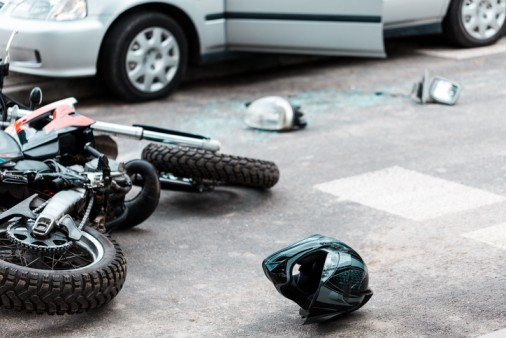
Motorcyclists know how quickly another driver’s mistake becomes an unavoidable peril. A driver turns left across a rider’s path, changes lanes without checking a blind spot, pulls out from a side street, or looks toward an approaching motorcycle without truly recognizing it. The motorcyclist may only have a split second to react.
Motorcyclists have less physical protection than occupants of passenger vehicles, and serious injuries can result even when the rider did everything possible to avoid the collision. Unfortunately, it happens more often than most believe.
Virginia recorded 2,006 motorcycle crashes in 2025. Those crashes killed 101 motorcycle riders and injured 1,1761. Even more striking, 798 riders suffered serious injuries, accounting for nearly 11 percent of all serious traffic injuries in Virginia that year.
We investigate how the crash occurred, address attempts to unfairly blame the motorcyclist, document the full effect of the injuries, and prepare each case for the path it may require, whether that means negotiation, litigation, or trial.
Motorcycle Accident Case Results
MacDowell Law Group has represented clients injured in serious motorcycle crashes and has obtained confidential settlements in motorcycle accident cases. Because those settlements are confidential, the firm cannot publicly disclose the amount or other details. But our clients were satisfied.
Every motorcycle accident case is different. The outcome of a claim depends on factors including how the collision occurred, the severity and permanence of the injuries, available insurance coverage, evidence of liability, and the damages the injured rider suffered. Past results do not guarantee a similar outcome in another case.
Why Motorcycle Accident Claims Require a Different Approach
Riders always need a lawyer to protect their rights.
An insurance adjuster may focus on the rider’s speed, riding experience, clothing, helmet, lane position, or reaction immediately before impact. In Virginia, where contributory negligence can prevent an injured person from recovering compensation, allegations about a rider’s conduct deserve particular attention.
The physical evidence can also look very different from a typical passenger-vehicle collision. The motorcycle and rider may come to rest far from the point of impact.
Damage to the motorcycle, marks on the roadway, debris patterns, sight lines, and damage to the other vehicle can help reconstruct what happened, but it can be difficult.
Injuries often differ as well. Without the protection of a vehicle frame, airbags, and seat belts, riders may suffer multiple injuries in a single crash.
A strong motorcycle injury claim needs early forensic investigation evidence, more so than a typical car accident case. The staff at MacDowell Law Group, P.C. know how to address these issues early on!
What to Do After a Motorcycle Accident in Fairfax
Our motorcycle accident attorneys in Fairfax encourage injured riders to protect their health and take additional steps after a collision that will help their case. What you do at the scene may also help preserve important evidence. Here are some important tips.
Consider taking the following actions:
Call 911. Report the crash and request emergency medical assistance when needed.
Move to safety if possible. A rider who remains in or near active traffic may face the danger of a secondary collision.
Photograph the scene. Capture the motorcycle, other vehicles, debris, skid or scrape marks, traffic signals, road conditions, and surrounding area.
Get witness information. A neutral witness may have seen a turn, lane change, traffic signal, or other detail that becomes disputed later.
Seek medical care. Do not assume an injury is minor because you can stand or walk immediately after the crash.
Preserve your motorcycle and gear. Damage to the bike, helmet, clothing, and protective equipment may provide information about the collision.
Be careful when speaking with insurers. Avoid speculating about speed, distance, injuries, or whether you could have done something differently.
Speak with an attorney before accepting a settlement. The long-term effects of serious motorcycle injuries may not yet be known when an early offer arrives.
When MacDowell Law Group accepts a motorcycle injury case, we can begin evaluating what evidence needs to be obtained or preserved while the client focuses on medical treatment.
Where Motorcycle Accidents Happen in Fairfax and Northern Virginia
Our experience in Northern Virginia gives us an understanding of the very different environments riders encounter throughout Fairfax County.
On Interstate 66, motorcycles share the road with dense commuter traffic, frequent lane changes, and vehicles entering and exiting at busy interchanges.
The Capital Beltway (I-495) adds high speeds, congestion, commercial traffic, and complex merging patterns.
Other heavily traveled routes include Route 50, Route 29, Route 123, Fairfax County Parkway, Braddock Road, and the Dulles Toll Road. Riders may encounter stop-and-go traffic one moment, and vehicles traveling at highway speeds the next.
Motorcycle crashes are not limited to major highways. A driver pulling out of a shopping center near Fairfax, turning through an intersection in Tysons, changing lanes near Vienna, or entering a road from a residential neighborhood can create just as much danger.
Farther west, riders may encounter more rural stretches of Northern Virginia roadway, where curves, changes in elevation, limited sight distances, loose material on the pavement, and higher travel speeds can become important factors in a collision investigation.
Where the crash occurred helps us identify what evidence may exist and what conditions to examine.
Drivers Often Say They “Never Saw” the Motorcycle
Our Fairfax motorcycle accident attorneys know that one explanation appears repeatedly after collisions: the driver says the motorcycle seemed to come out of nowhere.
That does not necessarily mean the motorcycle was impossible to see.
A driver may look toward an approaching rider without accurately judging the motorcycle’s speed or distance. A motorist may quickly check for a larger vehicle and begin a turn without noticing a motorcycle in the same field of vision.
Drivers changing lanes may also fail to check mirrors and blind spots carefully enough to identify a rider already occupying the adjacent lane.
These failures frequently arise in:
Left-turn collisions.
Intersection crashes.
Failure-to-yield accidents.
Unsafe lane changes.
Vehicles entering from driveways or parking lots.
Merging collisions.
U-turn accidents.
When visibility is disputed, we may examine photographs, measurements, witness statements, available video, vehicle positions, roadway design, obstructions, lighting, and other evidence to determine what the driver should have been able to see.
A driver’s statement that they did not see the rider does not, by itself, establish liability.
Common Types of Fairfax Motorcycle Accidents
Our attorneys build each claim around how the crash occurred, rather than relying on a vague, generalized theory of motorcycle accidents.
Left-Turn and Intersection Crashes
A driver who turns left in front of an approaching motorcycle may leave the rider with too little distance to stop or evade the vehicle. These cases can require close examination of right-of-way, sight distance, speed, traffic controls, and witness accounts.
Lane-Change and Blind-Spot Collisions
Motorcycles can be overlooked when motorists merge or change lanes. Evidence may help determine whether the rider was established in the lane, whether the driver signaled, and where contact occurred.
Being struck from behind can throw a rider from the motorcycle and cause severe injuries even at speeds that might produce a relatively minor passenger-vehicle collision.
Phone use, inattention, alcohol, drugs, and other forms of impairment can interfere with a driver’s ability to recognize and respond to a motorcycle. These cases may involve evidence beyond what is immediately visible at the scene.
Road Hazard and Defective Product Cases
Not every motorcycle crash begins with another driver. Dangerous roadway conditions or defective motorcycle and vehicle components may contribute to some collisions. Identifying the responsible party requires determining what actually caused the rider to lose control or crash.
Virginia Motorcycle Laws Riders Should Know
Our attorneys consider Virginia motorcycle law when determining how a crash occurred and responding to allegations about a rider’s conduct.
Virginia requires motorcycle operators and passengers to wear protective helmets that satisfy applicable safety standards. Operators must also use an approved face shield, safety glasses, or goggles unless the motorcycle has safety glass or a windshield.
Importantly, Virginia law states that failure to use the required helmet or eye protection does not constitute negligence per se in a civil case.
Virginia also regulates motorcycle passengers. A motorcycle must be designed to carry more than one person, and the passenger must have an appropriate seat and footrest.
Two two-wheeled motorcycles may lawfully travel abreast in a lane designed for one vehicle. Riders, however, remain subject to the traffic laws that generally apply to motor vehicles.
These rules matter because insurance companies may scrutinize a motorcyclist’s conduct after a crash. Courts should evaluate whether a rider violated a law, and whether an alleged violation contributed to the collision or injuries, based on the facts rather than assumptions.
Virginia’s Contributory Negligence Rule Makes Rider-Blaming Especially Important
Our Fairfax motorcycle accident lawyers pay close attention when an insurance company tries to shift even part of the responsibility for a crash to the rider.
Virginia follows a contributory negligence rule. Generally, an injured person who contributed to causing the accident can be barred from recovering damages.
That makes allegations about speed, following distance, lane position, signaling, visibility, or evasive action potentially significant.
It also makes evidence critical.
A driver may claim a motorcycle was speeding simply because the rider appeared suddenly. A motorist who failed to yield may argue that the rider could have avoided the collision. An insurer may point to some aspect of the motorcyclist’s conduct to create a contributory negligence defense.
Those allegations should not be accepted without investigation.
We examine the physical evidence, statements, available video, vehicle damage, traffic laws, and circumstances leading up to the collision to develop a clearer account of what actually occurred.
Evidence That Can Matter After a Motorcycle Crash
Our attorneys know that motorcycle accident evidence can disappear quickly.
Vehicles may be repaired or destroyed. Roadway debris disappears. Surveillance footage may be overwritten. Witnesses become harder to locate, and memories become less precise over time.
Depending on the case, useful evidence may include:
Police crash reports.
Scene photographs and video.
Damage to the motorcycle and other vehicles.
The rider’s helmet and protective gear.
Witness statements.
Nearby surveillance or traffic-camera footage.
Skid marks, scrape marks, and debris patterns.
Measurements and sight-line information.
Cell phone records when distraction is suspected.
Medical and emergency-response records.
Vehicle data when available.
Accident reconstruction analysis in appropriate cases.
In a serious collision, an accident reconstruction professional may analyze physical evidence to address vehicle movement, impact points, speed, and other disputed issues.
Our role is to identify the evidence the particular claim requires and prepare it for use in negotiations or litigation.
Serious Motorcycle Injuries Can Change the Value and Complexity of a Claim
Our attorneys have seen how the absence of a protective vehicle structure can make motorcycle injuries particularly severe.
Virginia’s 2025 crash data illustrates that risk. Although motorcycle crashes represented only about 2.4 percent of all traffic crashes in the Commonwealth, motorcycle riders accounted for approximately 12.2 percent of all traffic fatalities and 10.6 percent of serious traffic injuries.
The seriousness of an injury affects much more than the initial hospital bill.
A rider may require surgery, rehabilitation, assistive equipment, additional procedures, home modifications, or ongoing medical treatment. Injuries may prevent someone from returning to the same occupation or performing the work they previously did.
We consider these future consequences when developing the claim, not just expenses already incurred.
Compensation After a Fairfax Motorcycle Accident
Our attorneys evaluate damages based on what the collision has actually taken from the client.
Depending on the circumstances, compensation may be available for:
Past and future medical expenses.
Lost wages.
Reduced future earning capacity.
Rehabilitation.
Pain and suffering.
Permanent disability or impairment.
Scarring and disfigurement.
Other losses recoverable under Virginia law.
In a fatal motorcycle crash, qualifying family members may have the right to pursue a wrongful death claim for losses recognized by Virginia law.
No reliable “average” motorcycle accident settlement can determine what an individual case is worth. Injury severity, future medical needs, liability evidence, available insurance, employment consequences, and many other factors can substantially change a claim’s value.
How Insurance Coverage Affects a Motorcycle Accident Claim
Our motorcycle accident attorneys in Fairfax examine available insurance early because serious injuries can quickly exceed the liability coverage available from the driver who caused the crash.
A claim may involve the at-fault driver’s bodily injury liability coverage as well as applicable uninsured or underinsured motorist coverage.
Uninsured motorist coverage can become important when the responsible driver lacks applicable insurance or in certain hit-and-run crashes.
Underinsured motorist coverage may provide an additional source of recovery when the responsible driver’s policy is insufficient to cover the rider’s losses.
Other coverage questions may arise depending on vehicle ownership, the people involved, and the circumstances of the collision.
Identifying applicable policies is particularly important when a rider has suffered catastrophic injuries requiring extensive future care.
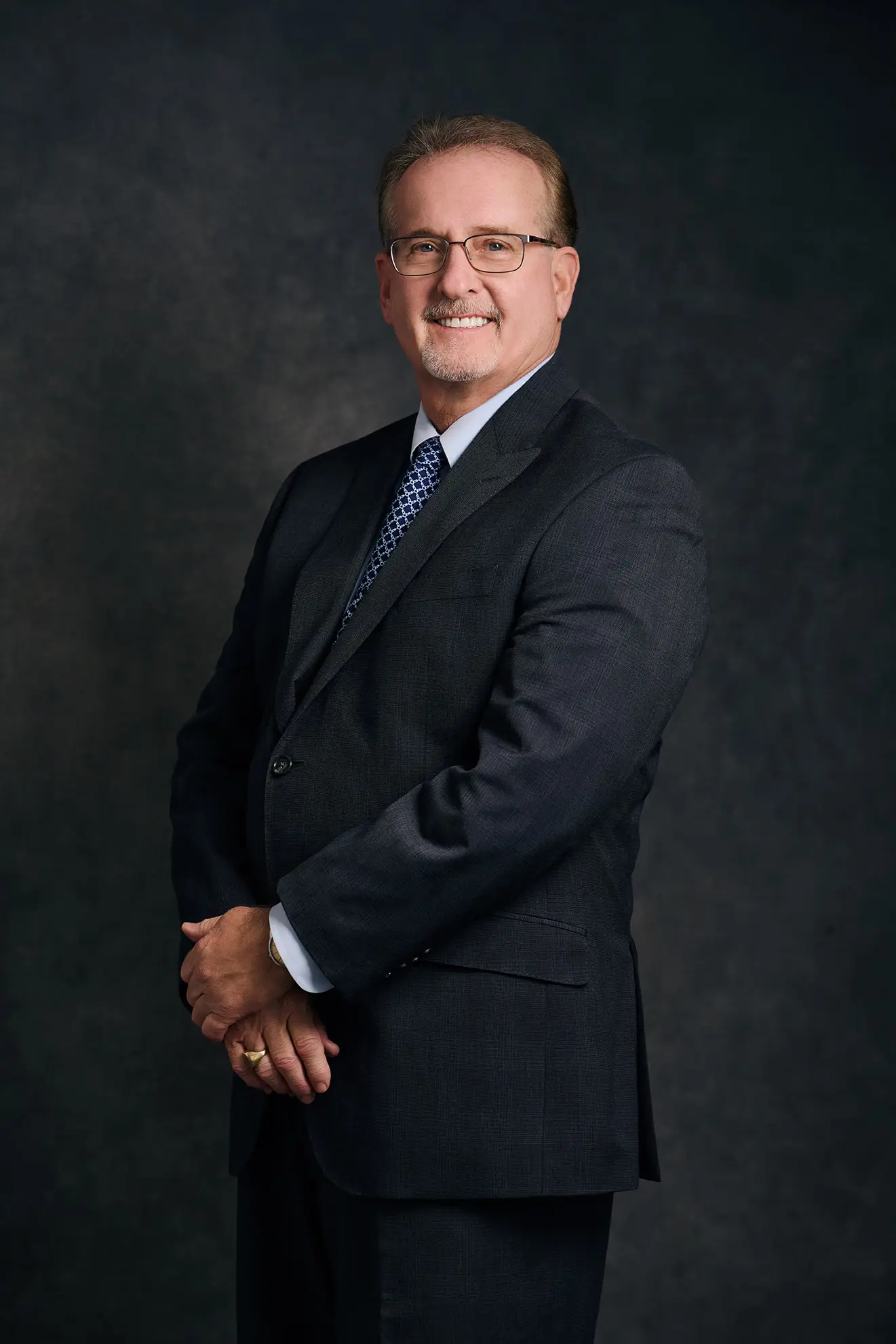
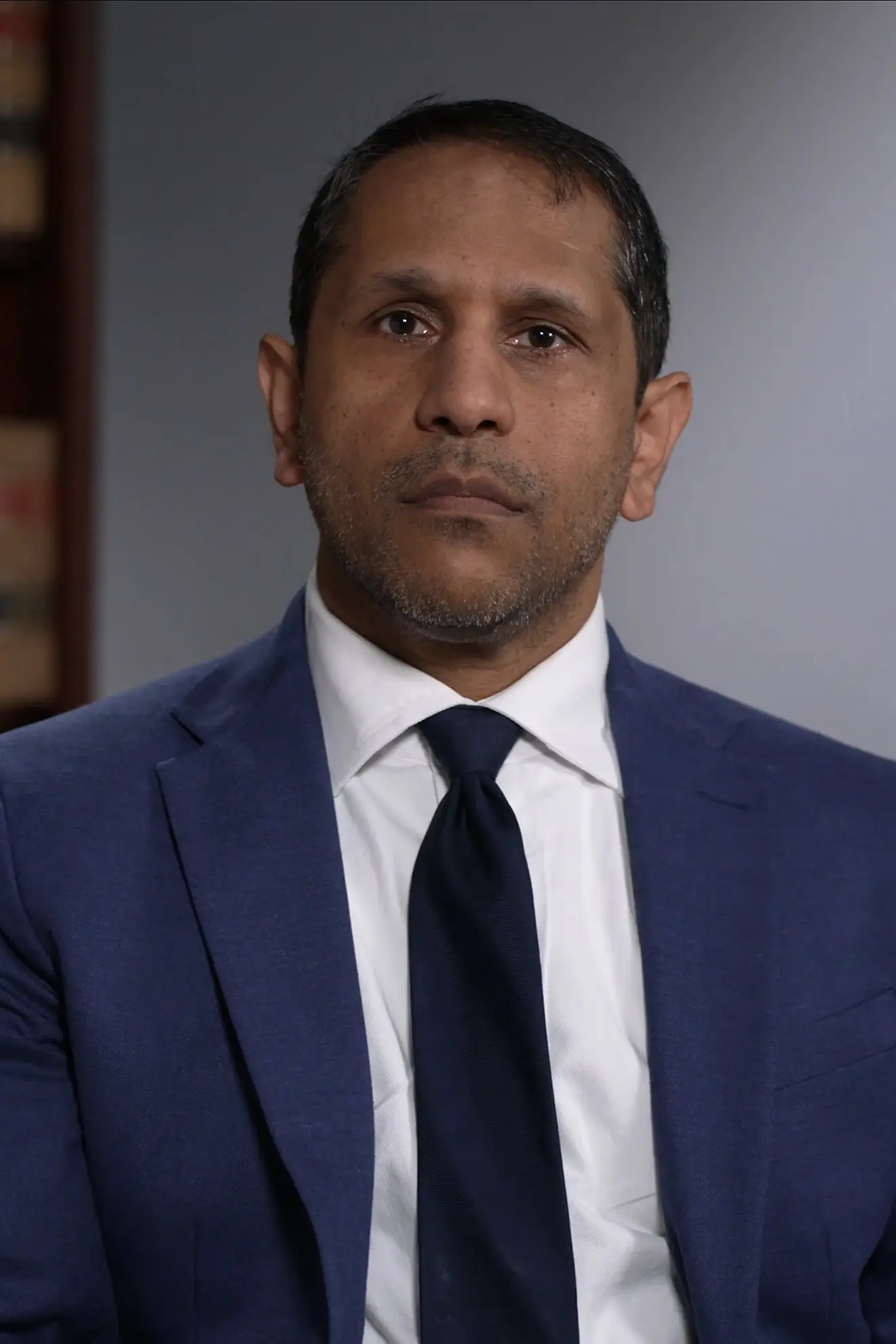
Richard F. MacDowell Jr. and Bhavik D. Patel Represent Injured Riders
When you hire MacDowell Law Group, you have direct access to attorneys who know your case and understand what is at stake.
Richard F. MacDowell Jr. has practiced law for more than four decades. He graduated cum laude from Washington & Lee University and earned his Juris Doctor from American University’s Washington College of Law.
Mr. MacDowell began his legal career as an Assistant Commonwealth’s Attorney in Fairfax County, where he gained early courtroom experience. He has since spent decades representing clients throughout Fairfax and Northern Virginia.
Attorney Bhavik D. Patel graduated from the University of Virginia School of Law and brings his litigation experience to the firm’s personal injury practice.
Our attorneys take the time to learn how a motorcycle injury has affected the individual client. That may mean understanding not only medical treatment, but time away from work, changes in mobility and independence, family responsibilities, and concerns about the future.
Those details matter when determining how to prepare a case and what constitutes a fair resolution.
Why Injured Motorcyclists Turn to MacDowell Law Group, PC
Our attorneys know riders sometimes enter the claims process already worried they will be judged for choosing to ride a motorcycle.
We focus instead on the evidence.
Clients who work with MacDowell Law Group receive:
Direct access to their attorneys. We remain involved and available throughout the case.
Individualized case preparation. The strategy reflects the particular crash, injuries, evidence, and client rather than a standard formula.
Careful investigation. We identify and preserve available evidence and consult qualified professionals when appropriate.
Attention to rider-blaming defenses. Virginia’s contributory negligence rule makes unsupported allegations of rider fault too important to ignore.
Litigation experience. We negotiate with insurers while remaining prepared to pursue a case in court when necessary.
Clear communication. Clients receive guidance about their options and the decisions that arise throughout the claim.
If your case is meritorious and the firm accepts it, MacDowell Law Group handles the matter on a contingency-fee basis. You pay no attorney fees unless we recover compensation for you.
Make Sure the Evidence Speaks Before Assumptions About Riders Do
A motorcycle crash can quickly become a dispute about speed, visibility, lane position, or what the rider supposedly could have done differently. Those assumptions should not replace the physical evidence.
MacDowell Law Group, PC investigates how motorcycle collisions actually occur and prepares claims with Virginia’s contributory negligence rule firmly in mind.
Frequently Asked Questions About Motorcycle Accident Claims in Fairfax, VA
What Should I Do Immediately After a Motorcycle Accident in Virginia?
Prioritize your safety and medical needs. Call 911, move away from active traffic if you can do so safely, and seek appropriate medical treatment.
If possible, photograph the crash scene and vehicles, obtain witness information, and preserve your motorcycle, helmet, and other riding gear. Be cautious about discussing fault or giving detailed statements to an insurance carrier before understanding your legal rights.
Who Can Be Held Liable for a Motorcycle Accident in Fairfax?
Another driver is frequently responsible, but that is not the only possibility.
Depending on what caused the crash, potentially responsible parties could include a vehicle owner, employer, business, property owner, contractor, or manufacturer. The investigation should identify the parties whose actions or failures contributed to the collision.
Can I Still Receive Compensation If I Was Partially at Fault?
Virginia’s contributory negligence rule can bar an injured person from recovery if that person contributed to causing the accident.
That does not mean an insurance company’s allegation that you were partly at fault is necessarily correct. Evidence should be examined carefully before determining whether the rider’s conduct actually contributed to the collision.
How Do You Demonstrate Fault in a Fairfax Motorcycle Accident Claim?
The evidence depends on the crash.
Police reports, photographs, video, witnesses, vehicle damage, roadway evidence, traffic laws, electronic records, and accident reconstruction may all become relevant. Our attorneys determine which evidence is needed based on how the collision occurred and what facts are disputed.
How Much Are Most Motorcycle Accident Settlements?
There is no useful average settlement for a motorcycle injury case.
A claim involving fractures that eventually heal has very different consequences from one involving permanent paralysis, a traumatic brain injury, amputation, or inability to return to work. Liability and available insurance coverage can also dramatically affect the potential recovery.
How Long Do I Have to File a Motorcycle Accident Claim in Virginia?
Virginia generally provides a two-year statute of limitations for personal injury lawsuits. Different deadlines or notice requirements may apply in certain circumstances, including some claims involving government entities.
The filing deadline is not the only reason to act promptly. Evidence needed to prove how a motorcycle crash occurred may disappear well before the statute of limitations expires.
How Long Does a Motorcycle Accident Settlement Take?
The timeline depends on factors including the severity of the injuries, duration of medical treatment, disputes over fault, available insurance, and whether litigation becomes necessary.
Resolving a claim before the medical outlook is sufficiently clear can make it difficult to account for future treatment and long-term limitations. Our attorneys work to move cases forward while making sure important damages are not overlooked to obtain a faster settlement.
Is It Better to Settle a Motorcycle Accident Claim or Go to Court?
That depends on the strength of the evidence and the settlement being offered.
A fair settlement can provide compensation without the additional time and uncertainty of trial. If an insurer refuses to offer an appropriate resolution, however, litigation may be necessary.
Our attorneys prepare claims so that the decision can be based on the client’s circumstances and the evidence rather than fear of going to court.
Richard F. MacDowell Jr. focuses his practice on personal injury, wrongful death, business representation, and family law. With over 40 years of experience, he is known for direct client access and aggressive litigation on behalf of injured clients across Northern Virginia. He founded MacDowell Law Group, PC in Fairfax and is admitted to practice in Virginia and Maryland, as well as before the U.S. Court of Appeals for the Fourth Circuit.
Bhavik D. Patel focuses his practice on personal injury, criminal defense, family law, and civil litigation. A graduate of the University of Virginia School of Law, he is known for staying directly accessible to clients throughout the life of their case, keeping them informed at every step. He is admitted to practice in Virginia and is a member of the American Bar Association.
Richard is truly everything my family and I could’ve asked for! Thank you, Richard
Luke N.
MacDowell Law Group was a highly skilled and experienced attorney. They are extremely professional and knowledgeable. I highly recommend this law firm for all the services they provide. Excellent law firm! Great job and thank you!
Faramarz P.
Their knowledge and willingness to go the extra mile to help the membership out is unmatched. Quick response times and flexible scheduling has made it convenient to handle cases in a timely manner. They have very effective strategic way of...
RL
My family's been MaDowell's law firm's clients since 2016. The team went above and beyond to help with different cases (car accidents and small business matters) through out the years. They are extremely patient and responsive to all my questions,...
Anica L.
Worked with MacDowell Law group on some business reorganization. Top notch. I've used them for personal legal for over 22 years with absolute satisfaction. Don't let Rich's easy going manner fool you...he'll bust his butt for you.
Steadfast Construction
Mr. Richard MacDowell is a very competent and experienced attorney. He is also a former prosecutor and knows his way around the legal system well. He knows his stuff. I was recently charged with a DWI but with Mr. MacDowell's...
Ethan F.
We hired Richard MacDowell to represent us in litigation with a health insurance company. He helped us navigate to a settlement. Professional and responsive. I'd recommend him.
Chris S.
Richard and his team are top notch in their fields. I have utilized their expertise on more than one occasion, and have also referred friends who need legal help, because THEY FIGHT FOR YOUR RIGHTS! With MacDowell Law Group, your...
New Earth Landscaping
The legal services that have been provided by this firm for not only my business but personal matters, have demonstrated their responsive, compassionate and knowledgeable nature. I have used them on several occasions and they have consistently shown attentive listening...
DQ
Absolutely the bast law group in Northern VA. They can handle just about any legal case and can take on anybody in court.